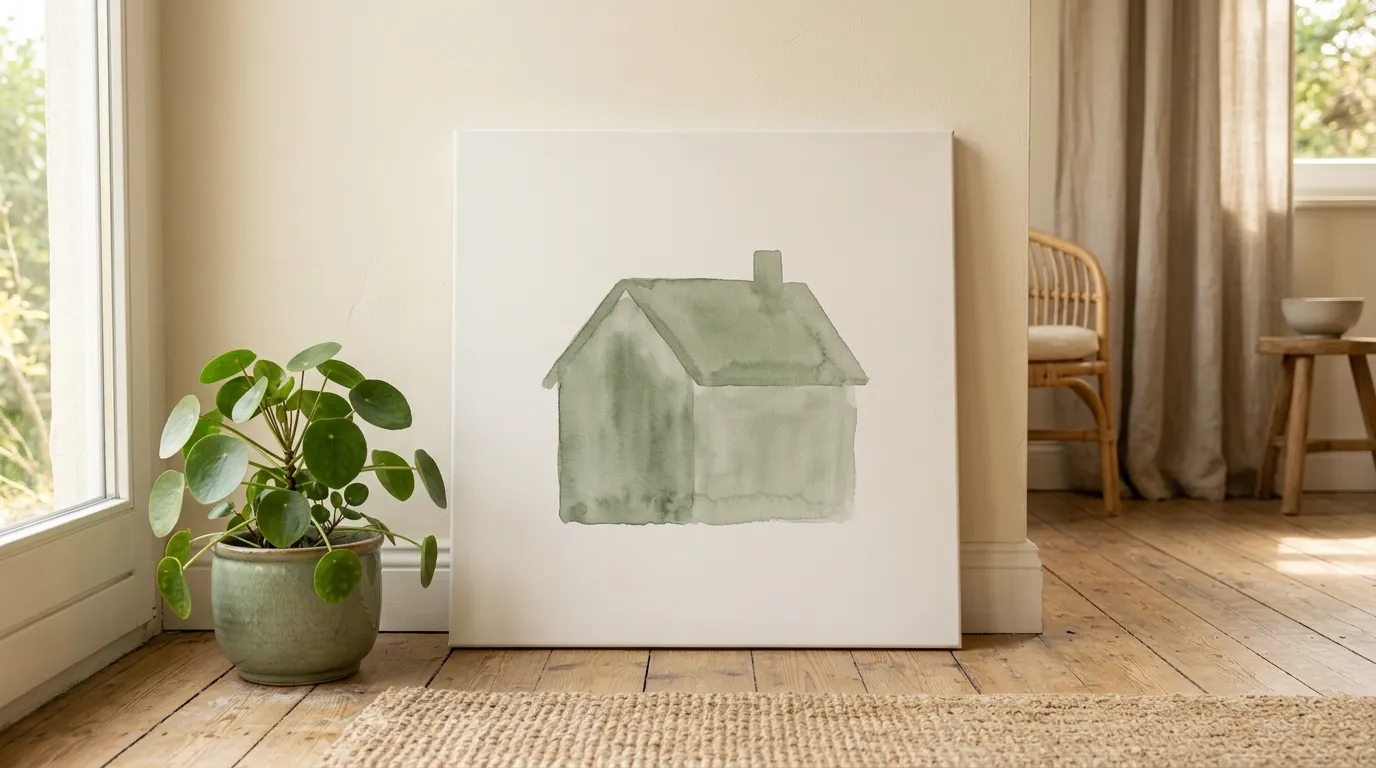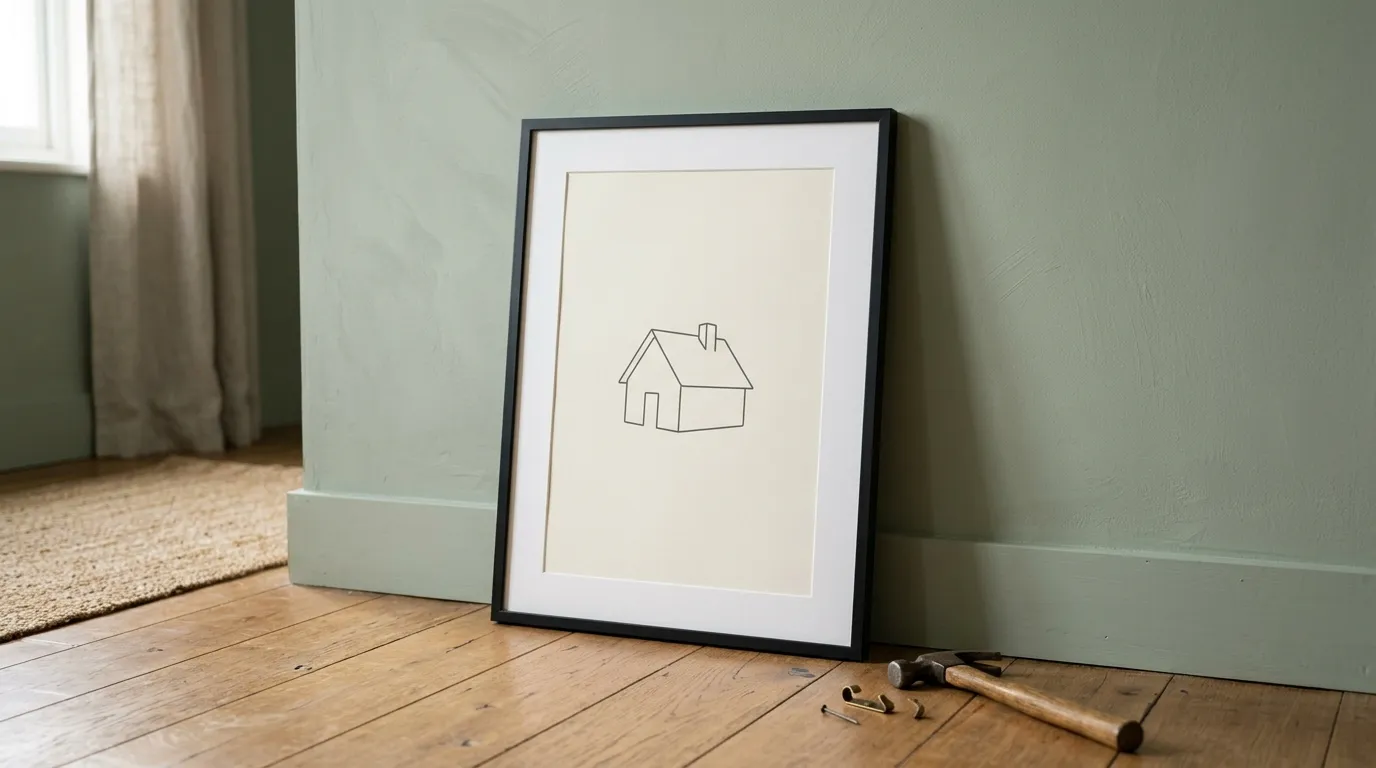
The practical case for this format is short. A household that moved in three weeks ago has not found the drill, the hooks or the spirit level, and an unframed print given to them is a job rather than a gift. This one is out of the packaging and on a wall the same afternoon.
The two frames
- Black: the higher-contrast option. The frame recedes and the picture does the talking, which suits fine line, blueprint and bold ink, and suits a room with white or pale walls.
- Natural wood: the warmer option, and the more forgiving one. It sits comfortably with all eight styles and with wooden furniture, and it's the safer choice when you haven't seen the room.
Those are the two frame colours we stock for prints. If a page anywhere promises you a white one or an oak one, it's wrong, and we'd rather say so than quietly ship you something else.
What the frame physically is
A wooden moulding with plexiglass rather than glass in front of the print. Plexiglass is the right choice for something being posted: it doesn't shatter in transit, and a broken pane is a good way for a framed gift to arrive ruined. The print fills the moulding, so there's no mount around it.
Two sizes, and only two
A3 and A2. A3 is the one for a study, a home office or a hallway, where the wall is small and the picture sits at eye level. A2 is for a wall with room around it, or above something. Larger than that, the print goes unframed: see the house print, which runs to 70x100 cm and lets the recipient frame it themselves.
How the picture gets there
Everything is built from one daylight photograph of the front of the house, taken square on. Eight styles are available: fine line, soft watercolour, bold ink, blueprint, pen and wash, screen print, evening light and charcoal. Whichever you settle on is shown to you first as a free watermarked preview, and the framed piece goes into production only after you say yes. No wording is printed on the picture, so there's no name, no date and no address. Should the original photograph be the thing you actually want framed, it can be printed as taken, and the sixteen houses already painted are there for anyone who would sooner choose than commission.
This sits in on the wall, beside the canvas, which needs no frame at all, and the metal print, which has no glass in front of it.