
How to use it
Tick the boxes about your household first: a driving licence, a car, benefits, children, pets, an employer, a rented home you are leaving. The list fits itself to you, so you won't wade through lines that don't apply. Each line says who to tell, when it is best done and, for the official ones, links to the page that does it.
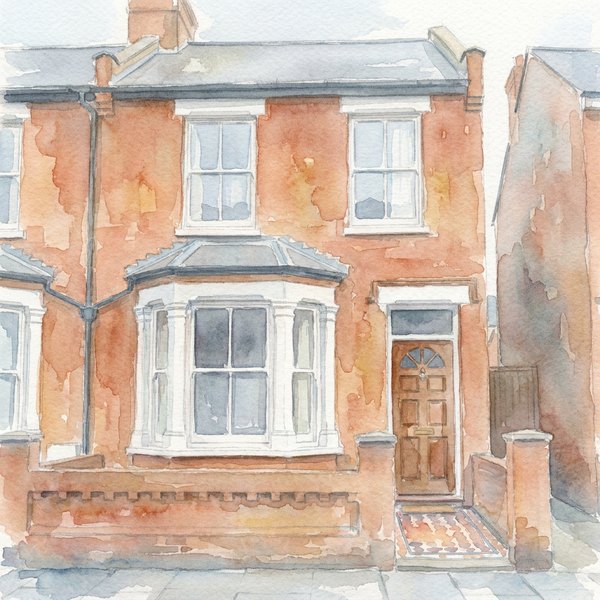 The House Illustration From £19.99
One photograph of the front of the house, restyled into an illustration. The watermarked preview is free.
Then tick each one off as you go. It's satisfying, and you'll know where you got to. The print button makes an A4 sheet with your ticks on it, and room to write the new address and the moving day at the top.
When to tell them
Some are worth doing before you go: broadband, insurance and post redirection, so nothing is left hanging on moving day. Others are best done once you're in. HMRC asks you to wait until you have moved before you update your address with them.
On the day itself, read the gas, electricity and water meters at both homes and take photos. Those readings are the line between the last bill and the first one.

A few things people miss
DVLA needs the address on your driving licence and on your vehicle log book (V5C), and on a personalised plate document if you have one. The licence change costs nothing, and GOV.UK says the log book change is usually free. You do not need a new passport: GOV.UK says an address change is not a reason to get one. And registering to vote again at the new address takes about five minutes online.
Sources
- GOV.UK: driving licence address, V5C log book, tell HMRC, register to vote, passport details, benefits changes, Council Tax. All read 30 October 2026.
- NHS, Register with a GP surgery, read 30 October 2026.
- Royal Mail, Redirection, read 30 October 2026.
The first hour in the new place has its own list: our first-hour checklist. For the wider plan, from boxes to the housewarming, start with the move.