How to use it
Fill in only the clues you have. Each one sets an edge. An old map that does not show your house yet says it was built after that year. A map, a census or a register that does show it says it was standing by then. A date stone sets both edges at once.
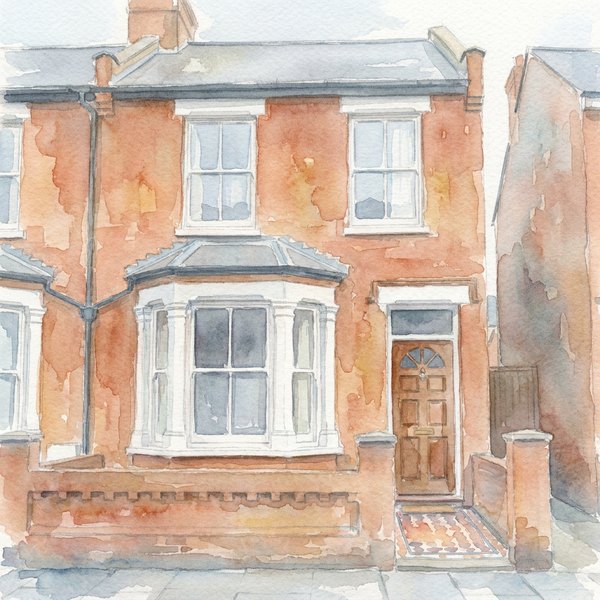 The House Illustration From £19.99
One photograph of the front of the house, restyled into an illustration. The watermarked preview is free.
Two clues from different records give you a window, such as "built between 1880 and 1891". If your clues disagree, the tool says so and does not guess which one is right.
Where to find the clues
Historic England suggests starting with the house itself. Some older homes have an "Erected" date or a name carved into the front. If your home is listed, its entry on the National Heritage List for England gives a short note of when it was built.
Old Ordnance Survey maps are the next step. Historic England says they can help establish when a house was built, and copies from the 1840s onwards are kept at county record offices. The National Library of Scotland puts OS maps for England and Wales online too. Find the last map without your house and the first one with it.
Then the records that list homes by address. The National Archives holds the census, taken every ten years from 1841 to 1921, the Valuation Office survey of 1910 to 1915, and the 1939 Register, taken on 29 September 1939. Tithe maps, which Historic England dates mostly to 1836 to 1850, show whether a building was there. Our house history research checklist has a link for each one.
How it is worked out
This is our own method, and it is an estimate. We take the latest year that says "not built yet" and the earliest year that says "already there". The house went up somewhere in between. If you tick the tithe map but do not know its year, we use 1850, the end of the usual span.
It is only as good as the years you type. Street numbers and names have changed in places, especially in the late 19th and early 20th centuries, so a census can list a different house under your number. Check the neighbours in the same record. We do not date houses by their bricks, windows or style, and we do not use any paid data.
Sources
Read on 30 October 2026: the Houses guide from The National Archives for the census, survey, register and tithe years; Historic England's home history pages for date stones, listing and street numbering, and its page on maps and plans; and the National Library of Scotland map collection.
Once you know its age, a picture of the place makes a good companion to the story. See how a house illustration is made.