How to use it
Work down the list. The first few steps cost nothing and take an evening. Tick each one as you go, then add your house's name or address and print the sheet: your ticks print with it, so the next trip to the record office starts where you left off.
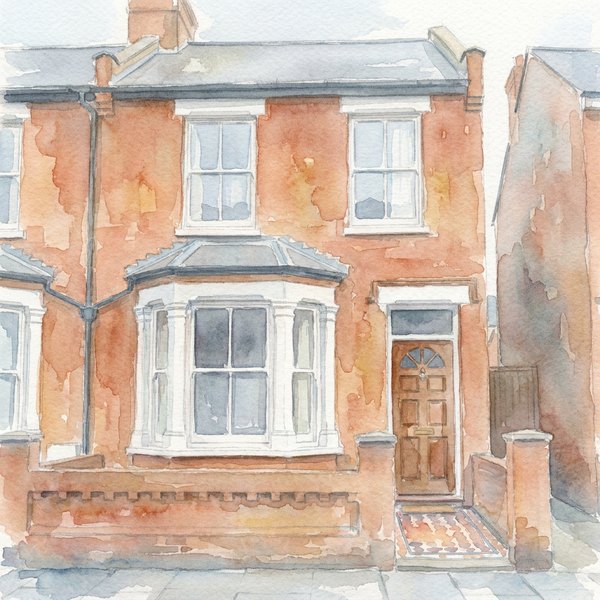 The House Illustration From £19.99
One photograph of the front of the house, restyled into an illustration. The watermarked preview is free.
The steps cover England and Wales, because the guides they come from do. Scotland and Northern Ireland keep their own records.
Where the steps come from
The National Archives says the best place to start is the local archive for the area. Local archives usually hold maps, electoral registers and family and estate papers. The National Archives itself is most useful for who lived in a house in particular years: the census, the 1910 survey and the 1939 Register.
Historic England suggests a similar route: find out how old the house is, learn about the area, then decide what you want to know. Its guides add photographs, sale catalogues, Land Tax lists and rate books. We have put the two together into one order, and the wording is ours.
A word about deeds
People often hope the deeds will tell the whole story. Sometimes they do. But The National Archives notes there is no legal duty to keep evidence of title for more than 30 years, under the Law of Property Act 1925, so older deeds may be gone. Ask your solicitor, your mortgage lender and HM Land Registry before you give up on them.
Sources
- The National Archives, Houses research guide, read 30 October 2026.
- Historic England, How to find out about your home's history and Trace your home's architectural history, read 30 October 2026.
- GOV.UK, Get information about property and land, read 30 October 2026.
Found a date already? Put it into our when was my house built tool to see the window. And once the story is told, a drawing of the house makes a fine first page for it.