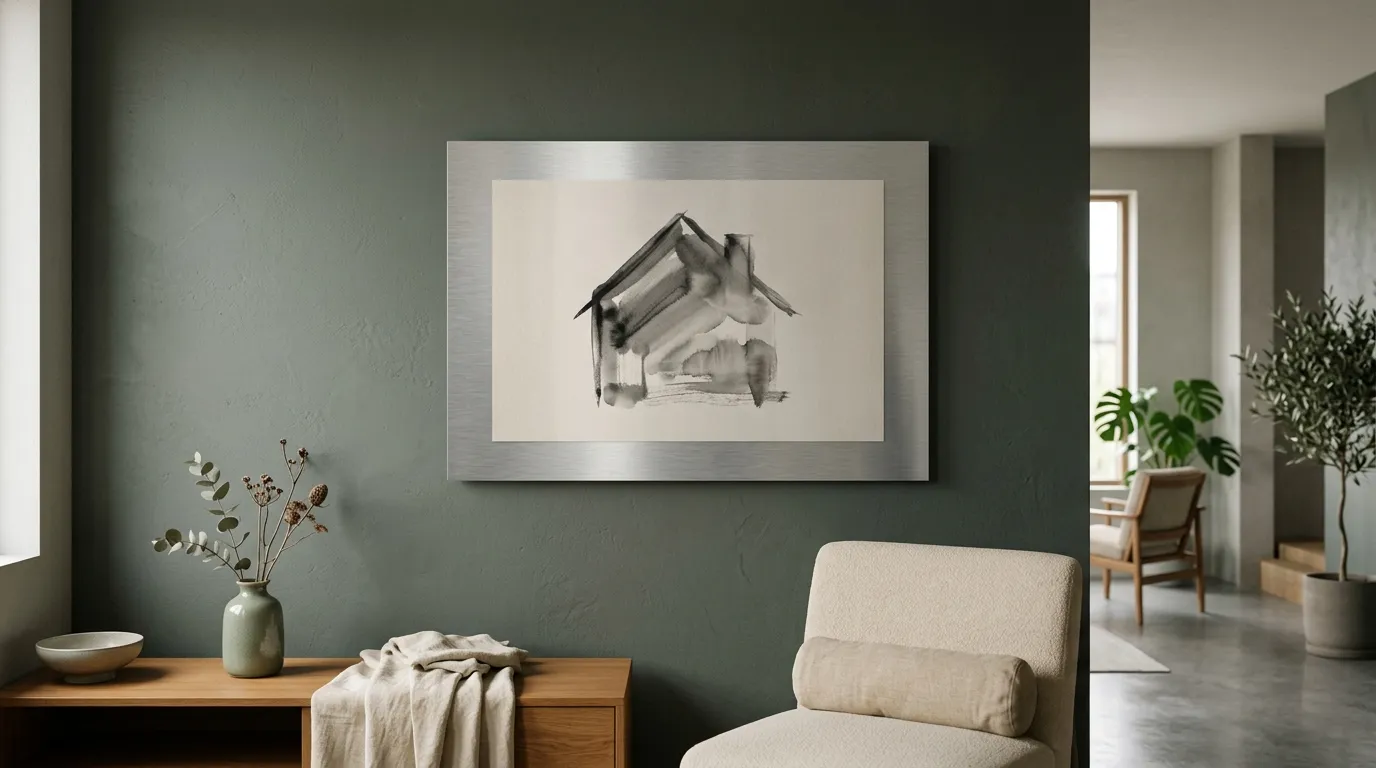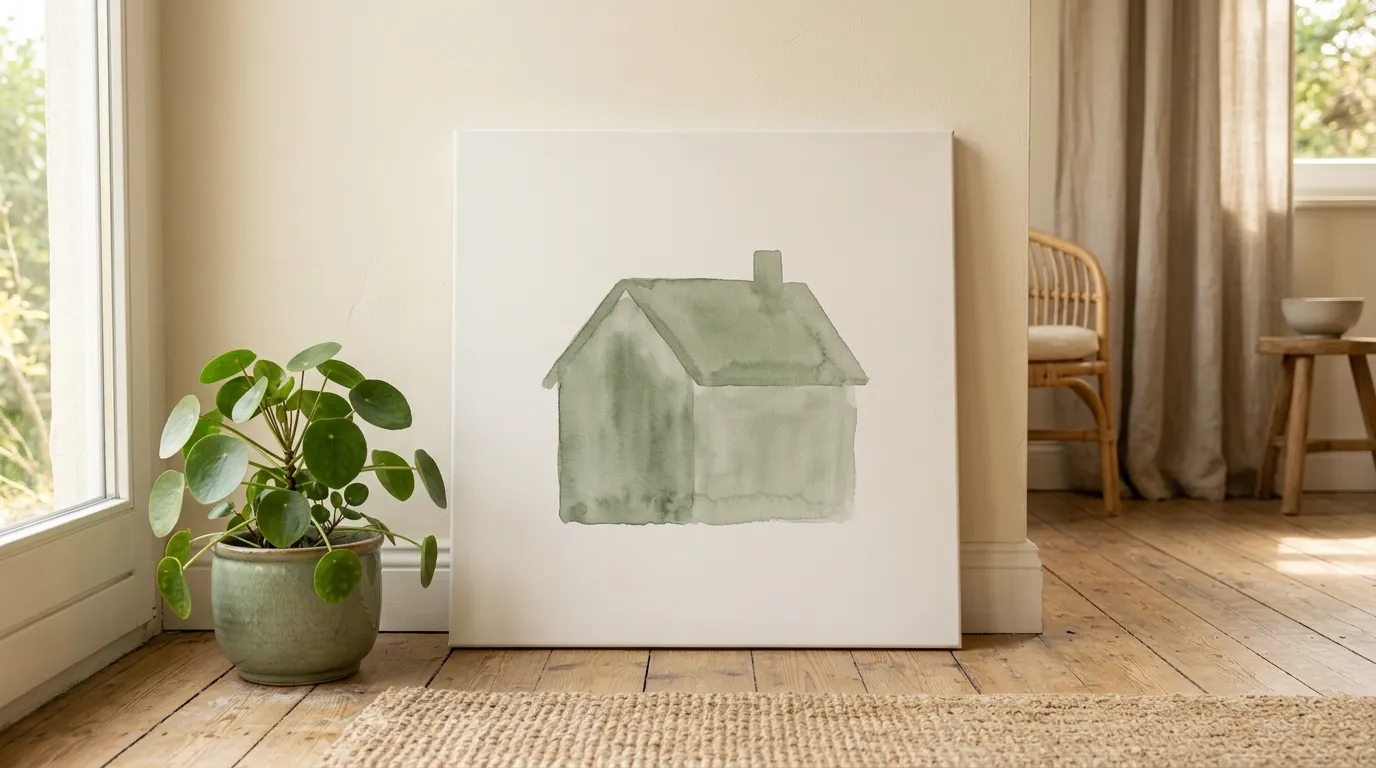
A house in its first month has more empty wall than anything else, and a canvas is the format that deals with a lot of it at once. It's also the shape a group gift usually takes, because four people putting in together reach something none of them would sensibly buy alone.
What gallery wrap actually means
The printed image continues around the sides of the stretcher rather than stopping at a white border, so the piece looks finished from an angle as well as head on. The stretcher is 2 cm deep. That's enough to sit off the wall and look substantial without the slab-like weight a deep box canvas has, and it means the picture doesn't need a frame to look like a finished object.
The wrap does eat a little of the edge of the image, so the house itself is composed to fall well inside the front face rather than bending round a corner.
The four sizes
- 30x40 cm: the gift-sized one, for a small wall, a landing or a shelf it can lean on.
- 40x50 cm: the middle option, and the safest if you haven't seen the room.
- 50x70 cm: a proper wall piece, and where a canvas starts to hold a chimney breast.
- 60x80 cm: the largest, for a living room wall with nothing else on it.
Canvas or framed print
They solve different problems. A canvas is unfussy and modern, it needs nothing bought afterwards, and it goes big without the weight and expense of glass. A framed print is more formal, sits better in a hallway or a study, and is the better answer for the fine line and blueprint styles, which want a hard edge around them. If the room is traditional, the frame usually wins. If the wall is big and empty, the canvas does.
How the picture gets there
It starts with one photograph: the front of the house in daylight, shot square on from the pavement. A phone camera is plenty. From there you pick a style, and there are eight of them: fine line, soft watercolour, bold ink, blueprint, pen and wash, screen print, evening light and charcoal. Whichever you choose comes back as a free watermarked preview on screen, and the canvas goes to print only once you've said yes to it. Nothing is captioned, so the picture carries no name, date or address. Prefer the photograph untouched, and it can be printed as taken. Or take one of the sixteen houses already painted rather than commissioning your own.
This is part of on the wall, with the unframed print and the metal print as the other two ways to put a house on a wall.